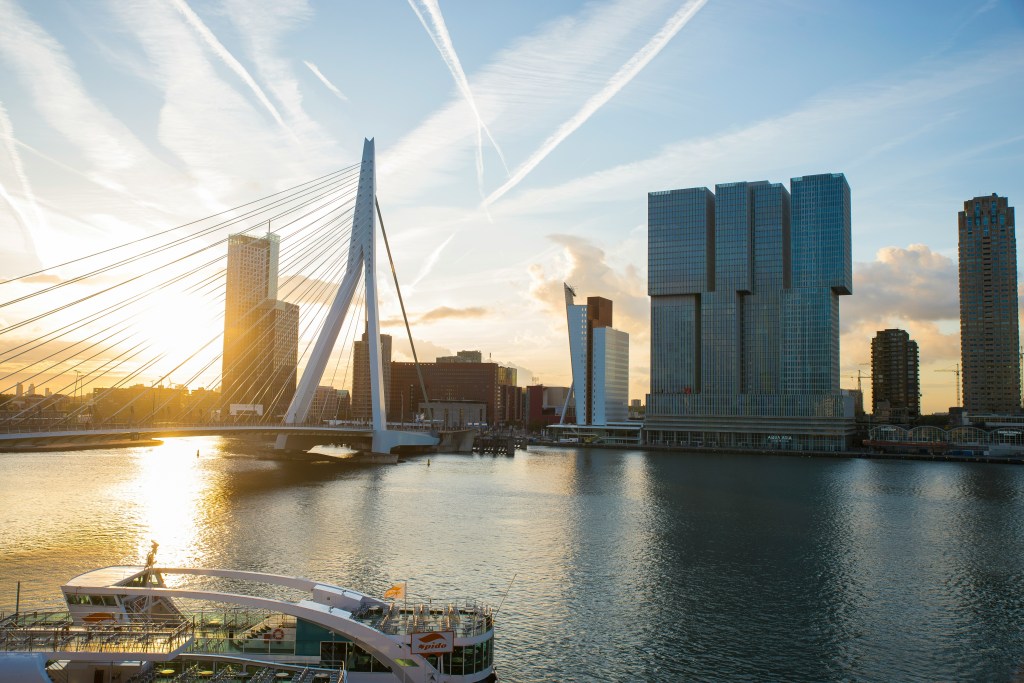
17th MAYS Annual Meeting June 10th – June 12th 2026, Rotterdam, the Netherlands and Online (Hybrid)
Submit your abstract here!
Submission Deadline: March 13th, 2026
What does Medical Anthropology do? – Implications and Applications of
Medical Anthropological Work Beyond Academia
The Medical Anthropology Young Scholars (MAYS) Network is pleased to announce its 17th Annual Meeting for 2026: ‘What does Medical Anthropology do? – Implications and Applications of Medical Anthropological Work Beyond Academia’. The annual meeting will take place at the Erasmus Medical Centre in Rotterdam, the Netherlands, from the 10th to 12th of June. We invite scholars, health practitioners, and researchers from diverse disciplinary and academic backgrounds to contribute to an engaging and thought-provoking dialogue.
Research within the field of medical anthropology has long examined how experiences of health and care take shape within specific social and institutional settings, as well as how understandings of the body are produced through everyday practices and multiple forms of expertise. Although much of this work is developed or ‘done’ within academic contexts, it continues its development and ‘doing’ both beyond when it is written and published and beyond the confinement of academic spheres.
If and when medical anthropological research moves beyond academia, it becomes part of broader interdisciplinary processes through which care is defined, organised, justified, and contested. Both in its processes and its outcomes – in these setting, research may inform practices and decisions, be reinterpreted in light of institutional constraints, or may remain only partially visible.
Though increasing attention is being paid to applied research, as well as to the creation and measurement of the ‘impact’ of our work, beyond academic spheres – we invite you to further think on what medical anthropological work does by reflecting on how knowledge circulates, how it is taken up in practice, what intended or unintended consequences processes of research may have and how responsibility is negotiated when, if and how research engages with ground-work experience. With this, we invite you to not only consider this doing in a practical sense, but also in the sense of an overarching ethics of our research.
We will be building on discussions and conversations of the past annual meetings on how we navigate plural perspectives, evolving practices, ethics, researcher responsibilities for equitable research and interdisciplinarity in their academic work. This time, we would like to invite young scholars from medical anthropology, as well as scholars, health practitioners, social workers, and researchers from diverse disciplinary and academic backgrounds, to contribute to an engaging and thought-provoking dialogue about the implications and application of medical anthropological work inside and outside of academic settings.
We encourage reflexive, theoretical, ethnographical, critical or historical contributions that address questions such as, but not limited to:
- What does medical anthropological work do in spaces of care, health and well-being?
- How are claims of being “grounded” or “grassroots” articulated in practice, and under what conditions might they coexist with — or even reproduce — forms of epistemic dominance in settings shaped by global inequalities?
- What kind of ethical dilemmas or interdisciplinary conflicts may arise when medical anthropology engages with applied clinical or institutional settings?
- How do activists, grassroots, and community-based engagements shape medical anthropological research, ethics and methods?
- What tensions emerge and which tensions are missing when medical anthropology moves across academics, policy, and practice-oriented domains?
- What is the place of medical anthropologists and medical anthropological work in interdisciplinary settings?
Efforts to amplify marginalized voices and address inequities in research and practice (contributions that bridge academic inquiry with lived experiences, grassroots initiatives, and policy-making) are particularly encouraged.
Application Process
We invite you to submit an abstract of no more than 350-500 words at the link below by March 13th. Notifications of acceptance will be sent by the end of March.
Submission HERE
Deadline for Abstract Submission (350-500 words): March 13th, 2025
Notification of Acceptance: March 31st, 2025
Deadline for Paper Submission (3,000-5,000 words): May 10th, 2025
Format of the Meeting
At the meeting, sessions will be organized based on thematic overlap. Participants will be paired with a discussant for every session who will comment on their work after their presentation. The discussant’s role includes introducing the session, identifying the common thread linking all presentations, and facilitating reflections and questions. To ensure a well-prepared discussion, we ask each participant to submit a paper of 3,000-5,000 words by May 10th, allowing discussants to organize their time effectively.
Given the nature of the meeting – intended as both a safe, judgement-free space and a possible springboard for other conferences – this year we welcome candidates who are curious about taking on the role of discussant. You can apply to be a discussant while submitting your abstract by selecting the relevant option in the submission form. We will discuss the details once the forms are filled in; marking yourself as interested in the first form does not imply any obligation at this early stage.
More information on workshops, keynotes, and events will follow in due time.
Beyond the meeting presentations, we will organize drinks in the city center of Rotterdam on the 12th of June at the end of the annual meeting.
The meeting will have a hybrid format.
Participation fee
In order to cover basic expenses, we ask for a 30 EUR participation fee for in-person participants, to be paid in cash upon arrival (offline participation).
Financial Support
A limited amount of funding is available for EASA members taking part in the Annual Meeting in person and who have financial need. Funding will be given in the form of a fixed stipend based upon the number of participants requesting funding (likely around 80 Euro). If you would like to request funding for this meeting, we ask that you indicate this on your registration form. For those that may be able to secure funds from elsewhere (i.e. departmental funding) this would help us to provide a greater amount of funds to those without any sources of funding. We are aware that the price of accommodation in Rotterdam can be prohibiting, and we will try to work with participants to find affordable options. Concrete details on accommodation will be forthcoming after abstract acceptances.
We look forward to welcoming you in Rotterdam!
MAYS Coordinators (mays.easa@gmail.com)
Marie Voerman, Department of Public Health, Erasmus Medical Centre Rotterdam
Simona Maisano, Department of Humanities, University for foreigners of Siena


 Medical Anthropology Young Scholars